

गिरफ्तारी और कारावास
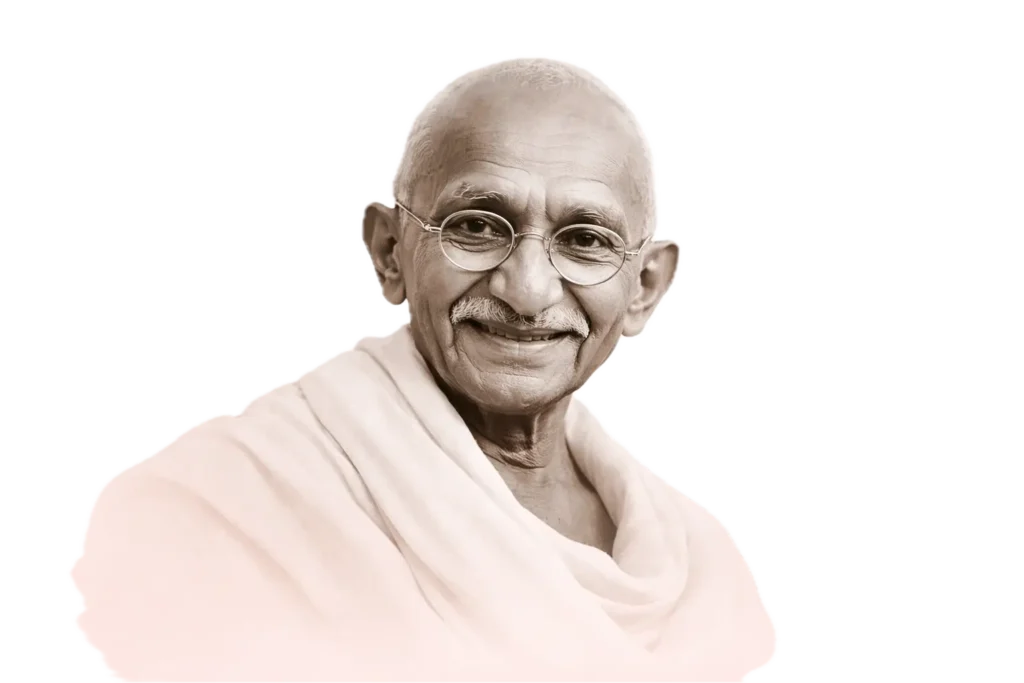
Gandhi’s imprisonments were not incidental episodes in his life. They were tied closely to the method he helped shape: public resistance carried out openly, with a willingness to accept legal penalty rather than avoid it. This page follows the arrest chronology on mkgandhi.org and presents the main arrests in two phases: South Africa and India.
दक्षिण अफ्रीका
Gandhi’s first prison terms came in South Africa, where the struggle against discriminatory laws helped shape his political method. The central issues included compulsory registration, movement restrictions, and other measures directed at Indians and other Asians. By the time of the 1913 campaign, the struggle had widened further, taking in the £3 tax, border-crossing restrictions, and the legal status of Indian marriages.
10 January 1908 — Arrested for refusing to register or leave Transvaal
Gandhi was arrested after resisting the Transvaal registration regime and refusing either to register under the law or leave the colony. He was sentenced to two months’ simple imprisonment, though he was released on 30 January 1908 after a compromise with General Smuts.
7 October 1908 — Arrested for not producing a registration certificate
Later that year, after registration certificates had been publicly burnt as part of the protest, Gandhi was again arrested when he could not produce his certificate while returning from Natal. This time the sentence was imprisonment with hard labour. The wider background was the renewed campaign against the “Black Act” and related registration requirements.
25 February 1909 — Arrested again for not producing the required certificate
In 1909 Gandhi was arrested once more in the Transvaal for failing to produce the required registration certificate. He was sentenced to three months’ imprisonment. By this stage, imprisonment had become a recognized part of the satyagraha struggle in South Africa.
6 November 1913 — Arrested during the Great March
In 1913 Gandhi led the Great March from Natal toward the Transvaal as part of the revived satyagraha. The movement protested a cluster of discriminatory measures, including the £3 tax, restrictions on movement, and the invalidation of non-Christian marriages. He was first arrested on 6 November 1913, then released on bail.
8 November 1913 — Arrested again during the same campaign
Two days later, Gandhi was arrested again while the march continued. He was again released, allowing him to rejoin the protest. The repeated arrests during these November days show how directly the authorities were trying to disrupt the march without immediately ending the agitation.
9 November 1913 — Arrested and later sentenced
On 9 November 1913 Gandhi was arrested for a third time in the course of the same movement. The chronology records that he was sentenced to nine months’ rigorous imprisonment, and then received a further three-month sentence on an additional count at Volksrust. He was released unexpectedly on 18 December 1913.
भारत
In India, Gandhi’s arrests became tied to much larger movements: anti-Rowlatt protest, sedition proceedings, the Salt Satyagraha, Civil Disobedience, and finally the Quit India movement. These imprisonments were not only personal penalties; they were also moments around which wider national action gathered force.
10 April 1919 — Arrested at Palwal while travelling toward Punjab
Gandhi was arrested at Palwal while on his way north during the Rowlatt Satyagraha and was escorted back to Bombay, where he was released the next day. The larger context was the anti-Rowlatt agitation and the government’s refusal to let him enter Punjab at a time of growing unrest.
10 March 1922 — Arrested on sedition charges
Gandhi was arrested near Sabarmati Ashram in connection with three articles published in Young India. The charge was sedition, and he was later sentenced to six years’ imprisonment. He was released early, on 5 February 1924, after surgery for appendicitis.
5 May 1930 — Arrested during the Salt Satyagraha
After breaking the Salt Law and setting off a nationwide wave of civil disobedience, Gandhi was arrested at 12:45 a.m. at Karadi near Dandi. The reason recorded is violation of the Salt Law. He was imprisoned without trial and released unconditionally on 26 January 1931.
4 January 1932 — Arrested without trial after the resumption of Civil Disobedience
After the failure of the Round Table Conference and the breakdown of the Gandhi-Irwin truce, Gandhi returned to India and the Civil Disobedience movement resumed. He was arrested in Bombay at 3 a.m. and taken to Yeravada Jail, where he remained until his release on 8 May 1933, when he began a 21-day fast.
1 August 1933 — Arrested in the course of renewed Civil Disobedience
In July 1933 Gandhi informed the Bombay government that he intended to march from Ahmedabad to Ras with followers in order to revive Civil Disobedience. He was arrested and imprisoned without trial on 1 August. Released on 4 August, he refused to comply with a restraint order, was re-arrested the same day, and was later sentenced to one year’s imprisonment. The chronology also notes a further release on health grounds after his fast in August.
9 August 1942 — Arrested after the Quit India resolution
In the early hours following the Quit India resolution, Gandhi was arrested under the Defence of India Rules and detained at the Aga Khan Palace. This was the longest of his late imprisonments, and he remained there until his unconditional release on 6 May 1944.
Closing note
Seen together, these arrests trace the movement of Gandhi’s public life: from resistance to racial legislation in South Africa to leadership in India’s mass anti-colonial struggles. Prison, for him, became not a side story but one of the recurring settings in which satyagraha was tested. The arrest chronology on mkgandhi.org is the main basis for this page; where the broader chronology gives fuller context, I have used that to explain the reason behind each arrest.
One small source note: mkgandhi’s pages show some overlap and occasional variation around episodes like Champaran in 1917, where one chronology mentions arrest and release while the arrest-specific page says he was served notice but not arrested. I have therefore kept this page to the arrests that are clearly and consistently listed in the arrest chronology.